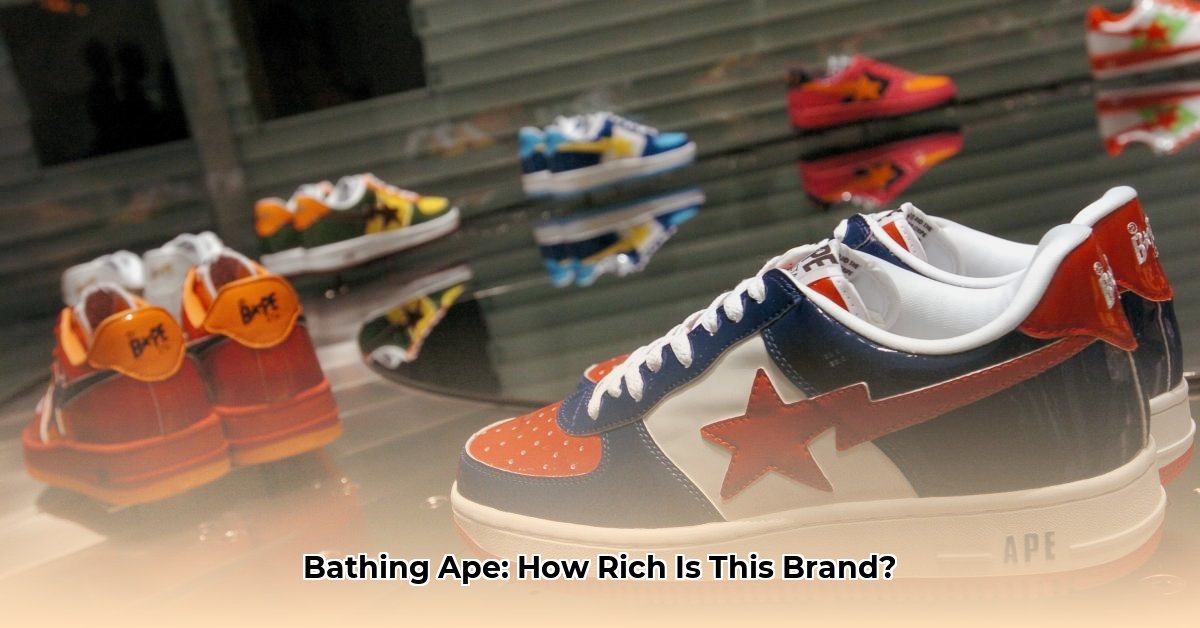
Bathing Ape: From Ura-Harajuku to Global Icon
The story of Bathing Ape (BAPE) is a compelling narrative of streetwear evolution. Founded by Nigo in Tokyo's Ura-Harajuku district, BAPE's unique blend of playful designs and high-quality materials rapidly cultivated a devoted following. But quantifying BAPE's net worth isn't a straightforward calculation. It's a multifaceted story woven from brand recognition, intellectual property, and future earning potential, making any single figure an oversimplification.
The Genesis of a Streetwear Empire
BAPE's initial success wasn't solely attributable to chance. Nigo's vision, coupled with shrewd marketing and distinctive designs, resonated deeply with a specific target audience. The brand quickly became synonymous with a particular aesthetic, attracting a loyal fanbase who appreciated its unique blend of playful aesthetics and premium craftsmanship. Strategic partnerships with prominent figures like Pepsi and Pharrell Williams propelled BAPE into the mainstream, establishing it as a globally recognized streetwear powerhouse. This rapid ascent, however, complicates the task of determining its true financial value.
How did collaborations with major brands impact BAPE's market position? This strategic approach significantly elevated the brand's profile and contributed to its global reach.
Deconstructing BAPE's Value: Beyond the Acquisition Price
The 2011 acquisition by I.T Group for approximately $2.8 million offers a valuable data point, but it's merely a snapshot in time. This figure reflects BAPE's worth at a specific juncture and doesn't encompass its subsequent growth, brand recognition, or the substantial intangible value associated with its iconic status. Consider the analogy of a classic car: its purchase price years ago only represents a fraction of its current worth, which is considerably influenced by its collectability, market demand, and rarity. Similarly, BAPE’s true financial standing extends beyond its past acquisition price, encompassing its brand reputation, intellectual property rights, and projected future revenues. These intangible assets significantly complicate precise valuation.
What factors contribute to the complexity of assessing BAPE's current market value? The brand’s evolution, global recognition, and intangible assets such as its iconic status and intellectual property rights significantly impact the valuation process.
Navigating the Shifting Sands: BAPE's Challenges and Adaptations
Despite its initial success, BAPE’s journey has not been without its obstacles. Some critics suggest that a relatively static design approach, coupled with increased production, diluted the exclusivity that initially fueled the brand's hype. The transition from a niche underground favorite to a mainstream brand presented new challenges. Experts debate whether BAPE's response to these changes was sufficiently swift, but the impact on its perceived value is undeniable. This period underscores the inherent risks of balancing growth with the preservation of a unique brand identity.
"Maintaining a brand's exclusivity while scaling production is a constant balancing act," notes Dr. Anya Sharma, Professor of Marketing at the University of California, Berkeley. "BAPE's journey highlights the challenges inherent in managing this delicate equilibrium."
Charting a Course Forward: BAPE's Future Trajectory
BAPE's future prospects, and thus its net worth, heavily depend on its ability to innovate while remaining true to its origins. The brand must adapt to the ever-evolving streetwear landscape without compromising the core elements that fueled its initial popularity. This requires several crucial strategies. Investing in fresh, innovative designs, leveraging social media to connect with younger audiences, and exploring new avenues like virtual worlds and the metaverse are all vital for sustained growth and increased valuation.
What key strategic steps can BAPE undertake to revitalize its brand and enhance its market position? Diversifying product lines, embracing digital platforms, and collaborating with contemporary artists could help BAPE to regain its competitive edge.
A Multi-Stakeholder Approach: Collaboration for Success
BAPE's success hinges on the collaborative efforts of various stakeholders, each with its own objectives and strategies:
- I.T Group (Owner): Focuses on refreshing designs, implementing targeted marketing campaigns, broadening product lines, and forging strategic partnerships.
- Design Team: Concentrates on introducing new design elements while remaining faithful to the brand's heritage, and developing sustainable manufacturing techniques.
- Marketing Team: Employs social media and influencer marketing effectively, fostering lasting customer relationships and exploring opportunities within the metaverse.
- Consumers: Evaluate authenticity, understand the secondary market, and stay informed on new releases and price trends.
Risk Assessment: Potential Obstacles to Growth
Several key risks could hinder BAPE's future growth and valuation:
- Counterfeit Products: Combating counterfeit goods requires robust anti-counterfeiting strategies.
- Brand Dilution: Maintaining high quality and unique design is crucial to prevent brand dilution.
- Shifting Trends: Adapting to evolving streetwear trends demands continuous market research and design innovation.
- Supply Chain Disruptions: Diversifying suppliers and creating resilient supply chains are essential to mitigate vulnerability.
Conclusion: The Enduring Legacy of BAPE
Determining BAPE's precise net worth remains a complex endeavor. It's not simply a sum of assets; it's a dynamic figure influenced by numerous intertwined factors. Its future success, and consequently its valuation, depends on its capacity to balance preserving its legacy with the necessity of embracing change and innovation, resonating with its existing fanbase and attracting a new generation of consumers. Whilst a definitive financial figure remains elusive, the ongoing narrative of BAPE is arguably more fascinating than any single numerical value.